

AI Solutions for Manufacturing & Supply Chain

AI Solutions for
Manufacturing & Supply Chain

Build Intelligent Factories and More Resilient Supply Chains

Mobiloitte designs and engineers AI for manufacturing across industrial enterprises, factories and supply-chain teams, supporting asset reliability, quality inspection, production planning, warehouse operations, supplier management and end-to-end operational visibility.

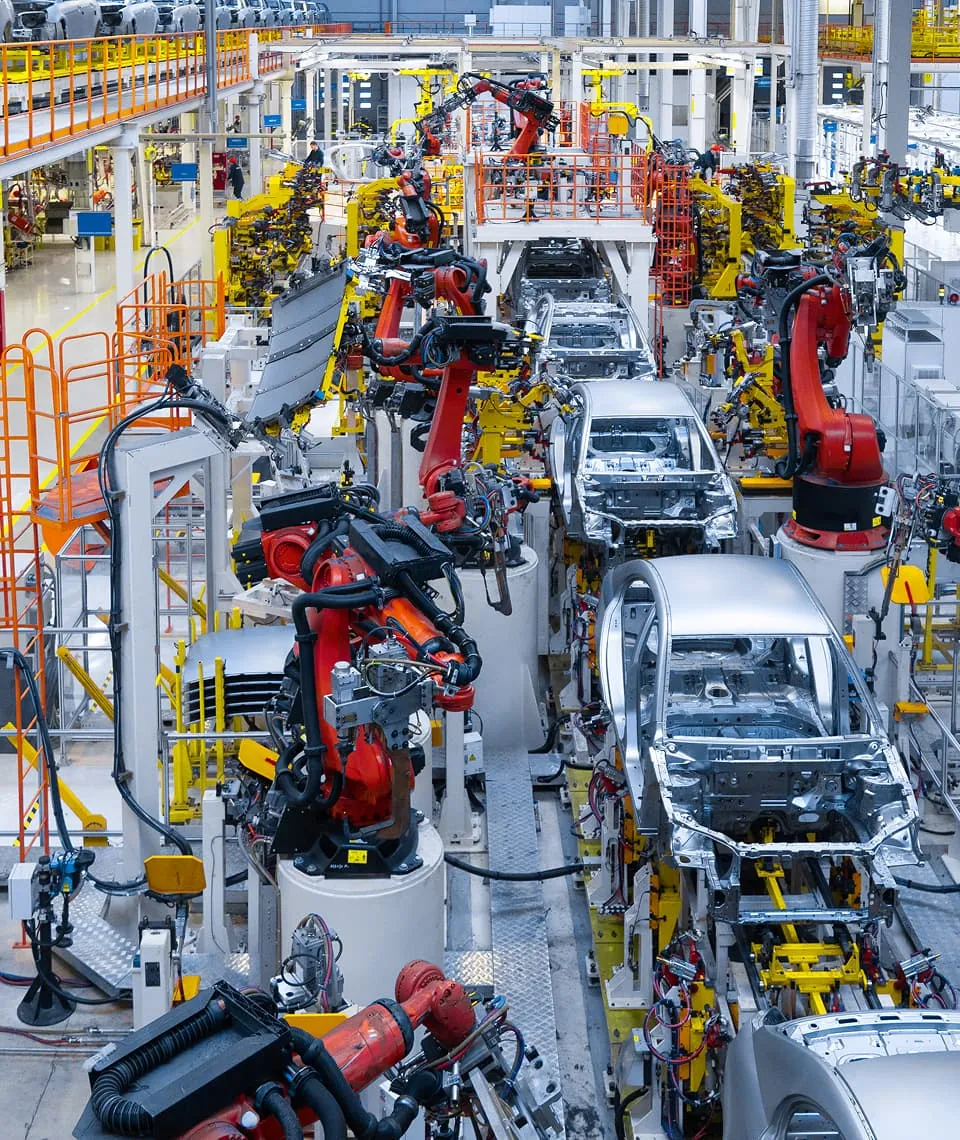
We combine manufacturing AI solutions, machine learning, computer vision, digital twins, enterprise RAG, agentic workflows, IIoT, edge intelligence and enterprise integration to connect intelligence with the systems, equipment and data already running manufacturing and supply-chain operations.

Smart Factory & Production Intelligence

Our smart factory solutions connect machine, sensor, quality and production data with AI to support predictive maintenance, computer-vision inspection, process intelligence and better manufacturing decisions.

Connected Supply Chain Intelligence

AI for supply chain management can support forecasting, inventory planning, supplier workflows, warehouse operations, exception management and end-to-end operational visibility. Our supply chain management solutions combine operational data, forecasting, inventory intelligence, supplier visibility and workflow automation around existing enterprise systems.

AI Solutions Across Manufacturing & Supply Chain Operations

01
01 — Predictive Maintenance & Asset Reliability

Predictive maintenance manufacturing workflows use machine, sensor, historian and maintenance data to identify asset-health signals and help teams prioritize condition-based and predictive maintenance. Capabilities can include: • Equipment anomaly detection • Condition monitoring • Failure-risk scoring • Vibration and temperature analysis • Remaining-useful-life analysis • Maintenance prioritisation • Work-order recommendations • Asset-health dashboards • Maintenance knowledge retrieval Predictive maintenance should help maintenance teams prioritise action rather than automatically replace established inspection and maintenance procedures.

02
02 — Computer Vision Quality Inspection

AI for manufacturing quality control can support suitable inspection activities such as defect detection, assembly verification, component checks, packaging inspection and quality-review prioritization. Deploy computer vision where visual inspection can support manufacturing quality workflows. AI inspection results should feed existing QMS and human quality-review workflows where appropriate rather than automatically becoming the final quality decision.

03
03 — AI Production Planning & Scheduling

Production AI can combine orders, capacity, machines, labour and operational constraints to support scheduling, bottleneck analysis, sequencing and AI production planning. Capabilities can include: • Production scheduling • Batch sequencing • Capacity analysis • Resource allocation • Bottleneck identification • Changeover planning • Schedule-risk alerts • What-if analysis • Constraint-aware recommendations The system should integrate with existing MES, ERP or APS environments where those platforms remain the operational systems of record.

04
04 — Digital Twin & Factory Simulation

A digital twin in supply chain management can model inventory, production, capacity, logistics or material-flow scenarios to support what-if analysis and operational planning. Applications may include: • Production-flow simulation • Capacity planning • Layout optimisation • Bottleneck analysis • Virtual commissioning support • Asset-performance modelling • Process optimisation • Maintenance scenarios • What-if planning Digital twins become more useful when connected with operational data and AI rather than treated as static visualisations.

05
05 — Demand Forecasting & Inventory Intelligence

Demand forecasting in supply chain operations can use historical demand, orders, seasonality, lead times and supply signals to support planning. Inventory management AI can support safety-stock analysis, replenishment planning, stockout-risk monitoring and inventory exception management. Inventory AI can help teams identify excess stock, material shortages, replenishment needs and inventory exceptions across plants and warehouses. Capabilities can include: • SKU-level forecasting • Demand sensing • Inventory optimisation • Safety-stock analysis • Spare-parts planning • Lead-time analysis • Stockout-risk alerts • Scenario planning • Inventory exception management

06
06 — Manufacturing Control Tower & Operational Visibility

A control tower for supply chain operations can consolidate production, inventory, supplier, warehouse and logistics information to surface operational exceptions, provide supply chain intelligence and improve visibility. Connect production, inventory, quality, warehouse, supplier and logistics information through one operational intelligence layer. The goal is not merely another dashboard—it is faster understanding of the exceptions that require human attention.

07
07 — Supply Chain AI Agents & Exception Automation

Supply chain workflow automation can use controlled AI agents to assist with supplier-information retrieval, procurement documents, order-status investigation, exception classification and approval preparation. Automation in supply chain workflows can reduce repetitive steps across procurement, supplier coordination, order investigation, exception routing and operational reporting. AI agents should operate within defined system permissions, business rules and approval thresholds. Higher-risk actions should retain appropriate authorised review.

08
08 — Worker Safety & EHS Decision Support

Use computer vision, sensor data and workflow automation to support safety teams with selected monitoring activities. Potential use cases include: • PPE detection • Restricted-zone alerts • Hazard recognition • Unsafe-condition reporting • Safety observation workflows • Incident-document processing • Inspection support • Corrective-action tracking AI should supplement—not replace—physical safeguarding, training and established safety procedures.

09
09 — Warehouse, Intralogistics & Robotics Intelligence

Build intelligence across warehouse and internal-material-flow operations. Capabilities can include: • Storage-slot optimisation • Pick-path optimisation • Inventory verification • Order prioritisation • AGV/AMR routing support • Dock scheduling • Labour planning • Warehouse anomaly detection • WMS-integrated workflows Where physical robotics or automated equipment is involved, AI controls should be engineered around the required safety, operational and human-supervision boundaries.

Connect AI With the Systems That Run the Factory

This section is one of the biggest opportunities to improve your SEO/AEO entity depth and CTO/CIO credibility.

Shop-Floor & Asset Layer

Machines • robots • production equipment • cameras • sensors • meters • AGVs/AMRs

Industrial Control & Edge Layer

PLCs • SCADA • gateways • edge devices • industrial networks • on-device AI

Operational Data Layer

Historians • telemetry • time-series data • machine states • quality data • production events

Manufacturing Operations Layer

MES • QMS • APS • EAM • CMMS • maintenance systems

Enterprise Layer

ERP • SCM • procurement • WMS • TMS • PLM • CRM • workforce systems

Data & AI Layer

Data pipelines • ML • computer vision • digital twins • RAG • AI agents • analytics

Experience Layer

Plant dashboards • operator interfaces • maintenance copilots • field/mobile apps • alerts

Governance & Security Layer

Identity • access controls • network boundaries • audit logs • model evaluation • agent permissions • human approval

IBM's industrial-AI definition explicitly spans OT, IIoT, robotics, sensors, digital twins, edge computing and real-time operational information, which is why this architecture language is important for manufacturing search relevance.

Run AI Closer to Machines When the Use Case Requires It

Some manufacturing workloads cannot depend entirely on cloud inference. Edge AI can support selected use cases where latency, connectivity, privacy or data volume make local processing useful.

Vision inspection

Analyse camera feeds closer to the production line for real-time quality control without network latency.

Machine anomaly detection

Process high-frequency equipment signals locally to catch micro-deviations before they cause downtime.

Offline intelligence

Maintain defined AI capabilities and operational continuity even during limited network connectivity.

Robotics & material

Support low-latency perception and autonomous operational workflows for factory robots and AGVs.

Factory data filtering

Process, summarize, and compress high-volume sensor information directly at the edge before sending selected, high-value data upstream to the cloud.

CAPABILITIES

Mobiloitte has dedicated Edge AI and IoT teams for manufacturing controllers.

Where Industrial AI Can Create Value Across Manufacturing

Manufacturers are dealing with complex equipment, fragmented operational data, quality requirements, changing demand, supply uncertainty and workforce knowledge gaps.

AI creates the most value when it works with existing manufacturing systems and helps teams make better operational decisions rather than becoming another isolated technology layer.

Asset Reliability

Move from reactive signals toward condition-aware maintenance planning.

Quality

Use computer vision and analytics to support earlier detection of production issues.

Production

Improve planning, scheduling, bottleneck analysis and capacity decisions.

Engineering

Use digital twins, simulation and operational data to evaluate changes before physical implementation.

Supply Chain

Improve forecasting, supplier visibility and exception handling.

Warehouse Operations

Support inventory, material movement and fulfilment decisions.

Workforce Knowledge

Use RAG and AI assistants to make approved procedures and technical information easier to access.

Operational Visibility

Connect data across plant and enterprise systems to help teams understand where intervention is required.

This lifecycle-oriented approach is closer to current Accenture, Siemens and Capgemini manufacturing positioning than a generic "AI-first" message.
How We Measure Manufacturing AI Outcomes

Asset
Reliability KPIs

Unplanned downtime, MTBF, MTTR, maintenance backlog, asset availability

Quality
Control KPIs

First-pass yield, defect rate, scrap rate, inspection cycle time, defect escape rate

Prod.
Production KPIs

Throughput, cycle time, OEE, schedule adherence, changeover time

Plan.
Planning KPIs

Forecast accuracy, schedule variance, capacity utilisation

Inv.
Inventory KPIs

Inventory turns, days of inventory, stockout frequency, excess stock

Supply
Supply Chain KPIs

OTIF, supplier lead time, exception volume, order cycle time

WH.
Warehouse KPIs

Pick accuracy, fulfilment time, dock utilisation, inventory accuracy

AI Qual.
AI Quality KPIs

Precision/recall, false positives, agent task success, escalation rate

Mobiloitte establishes baseline KPIs with the client before implementation. Percentage improvements should be published only when supported by an approved deployment, measurement period and methodology.

Manufacturing AI Readiness & Validation Sprint

Follow our proven 4-week methodology to accelerate your AI transformation.

Phase 1 — Plant & Workflow Discovery

Map production, maintenance, quality, warehouse and supply-chain workflows. Outputs: workflow map • business priorities • baseline KPIs

Active
Phase 2 — Systems & Data Assessment

Review MES, ERP, WMS, QMS, EAM/CMMS, historians, sensors, cameras and other relevant information sources. Outputs: system map • data-readiness assessment • integration dependencies

Active
Phase 3 — AI & Operational Risk Assessment

Identify suitable predictive, vision, optimisation, RAG or agentic use cases and define operational boundaries. Outputs: prioritised use cases • feasibility assessment • risk controls

Active
Phase 4 — Proof of Value

Where appropriate, validate the highest-risk use case using representative production data. Outputs: focused prototype • technical evaluation • KPI comparison

Active
Phase 5 — Production Roadmap

Define target architecture, integrations, infrastructure, controls, rollout and operating ownership. Outputs: architecture blueprint • implementation roadmap • KPI framework

Active

Responsible AI for Manufacturing & OT Environments

Define how AI services connect with plant systems and what network boundaries apply.

Read vs Write Access

AI should not automatically receive unrestricted control of production equipment. Start with: Read → Analyse → Recommend → Human Approve before considering tightly controlled automated actions.

Agent Permissions

Define which APIs, systems, data and actions each AI agent may use within the operational environment.

Model Evaluation

Evaluate prediction quality, computer-vision false positives, model drift and failure modes against representative operating conditions.

Edge Security

Secure models, devices, gateways, credentials, updates and telemetry to protect the factory floor.

RAG Access Controls

Ensure employees and AI agents retrieve only manufacturing information they are authorised to access.

OT Cybersecurity & Auditability

Record appropriate model, agent, system and human activity. Architecture can be informed by applicable industrial cybersecurity practices such as ISA/IEC 62443 and NIST OT-security guidance.

Turn Manufacturing Knowledge Into Accessible Operational Intelligence

Manufacturing organisations hold valuable knowledge across work instructions, manuals, maintenance history, SOPs, quality documents, and engineering records. Enterprise RAG provides permission-aware access to this approved information.

Maintenance Copilot

Help technicians quickly find procedures, historical asset data, and troubleshooting information.

Operator Assistant

Instantly retrieve approved work instructions, safety guidelines, and live production information.

Quality Assistant

Search inspection procedures, complex quality standards, and historical non-conformance records.

Engineering Assistant

Retrieve mechanical specifications, drawings metadata, and approved engineering knowledge.

Supply Chain Assistant

Easily find supplier details, procurement protocols, inventory status, and operating procedures.

Incident & Root-Cause

Summarise approved incident logs, maintenance events, and quality data for rapid investigation.

"Siemens' current industrial-AI direction similarly includes assistants that help technicians retrieve machine and operational knowledge while human experts remain responsible for what action to take."

Why Mobiloitte for Manufacturing & Supply Chain AI?

Manufacturing Software Development Company

As a manufacturing software development company, Mobiloitte combines AI, computer vision, IoT, edge, cloud, mobile and enterprise software within one industrial engineering programme.

Smart Factory Solution Provider

As a smart factory solution provider, Mobiloitte can connect suitable AI workloads with existing machines, sensors, MES, ERP, QMS, WMS and operational data environments.

AI Solutions for Manufacturing & Supply Chain

Supply Chain Solutions Provider

As a supply chain solutions provider, Mobiloitte supports forecasting, inventory, supplier, warehouse and exception-management workflows around existing enterprise systems.

Digital Twin & Production Intelligence

Connect simulation and operational information to support planning, maintenance and process improvement.

Enterprise RAG & AI Agents

Build controlled knowledge and workflow agents around approved manufacturing information and enterprise systems.

Security, Quality & Regulatory-Aware Engineering

Manufacturing requirements vary by product, sector, jurisdiction and technology environment. Mobiloitte can design technical architecture and controls around the specific quality, information-security, OT-security, electronic-record, worker-safety and data-protection requirements identified during discovery. Where relevant, requirements can be mapped to applicable organisational standards, regulations and industry frameworks rather than presenting one universal compliance claim.

Manufacturing AI Insights & Engineering Guides

Explore practical guidance on industrial AI, predictive maintenance, digital twins, computer vision, smart factories, supply-chain intelligence and manufacturing application modernisation.

Predictive Maintenance Architecture for Smart Factories

Read Guide

AI Vision Inspection: From Camera to Quality Workflow

Read Guide

MES + AI Integration Guide

Read Guide

Digital Twins for Factory Planning

Read Guide

Enterprise RAG for Manufacturing Knowledge

Read Guide

AI Agents for Supply Chain Exception Management

Read Guide

Edge AI for Production Lines

Read Guide

OT Cybersecurity for AI Manufacturing Systems

Read Guide

AI Application Modernisation for Manufacturers

Read Guide

Frequently Asked Questions

What AI Solutions for Manufacturing and Supply Chain Does Mobiloitte Provide?
Mobiloitte provides manufacturing AI solutions and AI supply chain solutions across predictive maintenance, computer-vision quality inspection, production planning, digital twins, demand forecasting, inventory intelligence, control towers, warehouse operations, enterprise RAG and controlled AI-agent workflows.
How does predictive maintenance AI work?
Predictive maintenance manufacturing systems analyse machine-condition, sensor, historian and maintenance information to identify abnormal behaviour or potential degradation and support maintenance prioritisation.
How are digital twins used in manufacturing?
A digital twin in supply chain management can model inventory, production, capacity, logistics or material-flow scenarios to support what-if analysis and operational planning.
How does Mobiloitte address AI and OT cybersecurity?
Architectures can include network and system boundaries, identity controls, restricted API access, agent permissions, secure edge environments, logging, AI evaluation and human approvals. Requirements should be mapped to the manufacturer's specific OT environment and applicable policies or standards.
How should a manufacturer start an AI initiative?
Start with one clearly defined production, quality, maintenance or supply-chain problem and measurable baseline. Review the relevant systems, equipment, data and operational constraints, determine whether AI is appropriate, and validate the highest-risk assumptions before moving toward production deployment.
Can Mobiloitte integrate AI with MES, ERP, WMS and other manufacturing systems?
Yes. MES system integration and related enterprise integrations can connect approved AI applications with MES, ERP, WMS, QMS, PLM, APS, EAM/CMMS, historians and IoT platforms through APIs, events and middleware.
Can computer vision automate manufacturing quality inspection?
AI for manufacturing quality control can support suitable inspection activities such as defect detection, assembly verification, component checks, packaging inspection and quality-review prioritization. Production implementations should be evaluated against representative products, lighting, camera conditions and defect types, with human review retained where required by the quality process.
Can AI agents automate supply-chain workflows?
Supply chain workflow automation can use controlled AI agents to assist with supplier-information retrieval, procurement documents, order-status investigation, exception classification and approval preparation. Permissions, approval thresholds and human escalation should be defined before agents interact with operational systems.
Can AI directly control production equipment?
Direct control should not be assumed. Many manufacturing AI use cases are better introduced as read, analyse and recommend workflows. Any automated control of physical equipment should be subject to appropriate engineering, safety, cybersecurity and operational review.

Didn't find your answer? Send us an Email

Modernize Your Factory with AI

Start AI Manufacturing Pilot or Get Factory Intelligence Blueprint.